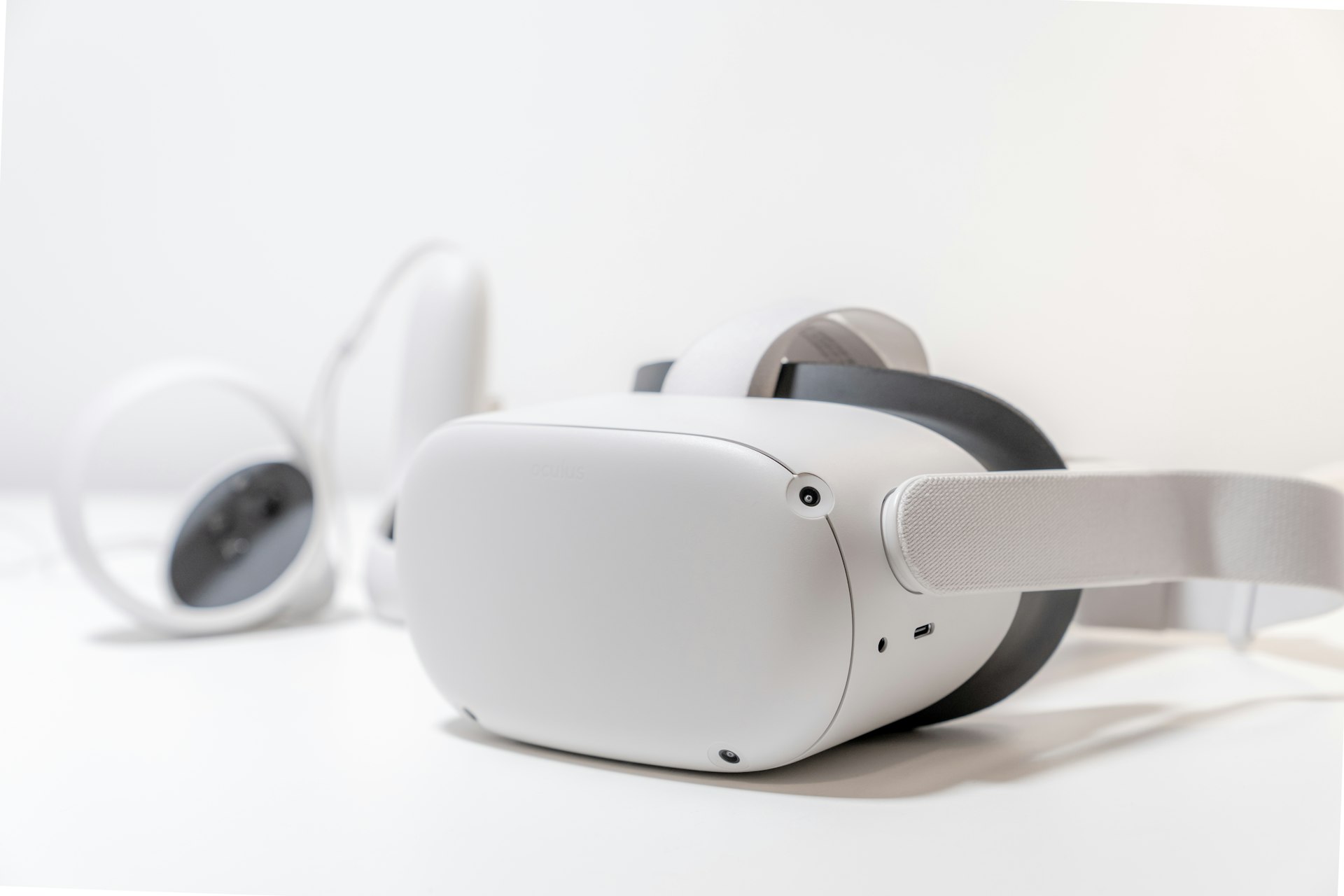
We've all seen the demos. Augmented reality glasses promising to transform your gaming sessions, movie nights, and even your workday. Companies like Xreal and Viture are pushing the envelope, offering sleek designs and impressive virtual displays that project your favorite content into your personal space. For many, this is the dream: a portable, private cinema experience, a massive monitor that folds away into your pocket. But for those of us building the software that will eventually power these devices, the conversation needs to shift from consumer fantasy to developer reality.
The Developer's AR Toolkit: More Than Just a Display
While the current focus is on mirroring existing devices like the Steam Deck or Nintendo Switch, this approach is fundamentally limited. It treats AR glasses as passive output devices, akin to a portable monitor. For developers, however, the true potential of AR lies in its ability to create interactive, spatially aware experiences. This means we need hardware and software stacks that are designed from the ground up for manipulation, not just consumption.
The first critical requirement is open access to sensor data. If developers can't reliably access positional tracking, depth sensing, and raw camera feeds, creating truly immersive AR applications becomes an uphill battle. Proprietary SDKs that abstract away this crucial information stifle innovation. We need APIs that allow developers to directly interface with the hardware, enabling them to build experiences that respond to the user's environment in real-time. For instance, imagine an AR application that dynamically adjusts its UI based on the physical layout of a server room, or one that overlays diagnostic information directly onto a piece of machinery.
Ergonomics and Extensibility: Building for the Long Haul
Comfort is king, especially when we're talking about devices intended for extended use. Early AR headsets often suffered from bulkiness and poor weight distribution, leading to fatigue and discomfort. Future AR glasses need to be lightweight, well-balanced, and offer adjustable fittings to accommodate a wide range of users. Beyond personal comfort, though, is the need for physical extensibility. This means looking for devices that offer:
- Modular Components: The ability to swap out batteries, attach external sensors, or even upgrade processing modules would significantly extend the lifespan and versatility of AR hardware. This supports a more sustainable development model and allows for specialized use cases.
- Standardized Ports: USB-C for power and data is a given, but we should also consider standardized connectors for external peripherals like haptic feedback devices or specialized input controllers.
- Developer-Friendly Form Factors: While the sleek, glasses-like form factor is appealing for consumers, developers might benefit from slightly more robust designs that incorporate better cooling or more readily accessible internal components for prototyping and debugging.
A Robust Software Ecosystem: Where the Real Magic Happens
Hardware is only half the battle. Without a strong software foundation, even the most advanced AR glasses will remain novelty items. Developers need a clear path to deploying applications, a well-documented SDK, and robust development tools. This includes:
- Cross-Platform Compatibility: While native development will always have its place, the ability to leverage existing web technologies or cross-platform frameworks (like Unity or Unreal Engine) will accelerate development and broaden the reach of AR applications. Imagine building a web-based AR experience that can run on any compatible headset without requiring a separate app download.
- Spatial Anchors and Persistence: For enterprise and collaborative AR, the ability to place virtual objects that remain fixed in the real world across multiple users and sessions is paramount. This enables persistent AR experiences, like virtual whiteboards in meeting rooms or architectural visualizations that stay put.
- Intuitive Interaction Models: Hand tracking and eye tracking are becoming more sophisticated, but developers need reliable, discoverable APIs to implement these interactions. Furthermore, the ability to combine these with traditional input methods (like controllers or even voice commands) offers the most flexible user experience.
- Performance Optimization Tools: AR rendering is computationally intensive. Developers need profiling and debugging tools that help them identify performance bottlenecks and optimize their applications for smooth, stutter-free experiences.
The Long Game: Rethinking AR for Productivity and Creation
The current crop of AR glasses, while exciting, often feels like a stepping stone. The focus on replicating existing screen experiences misses the transformative potential of truly spatial computing. For developers, the dream AR device isn't just a personal cinema; it's a powerful, customizable platform for building the next generation of applications. It's a tool that empowers us to create, to collaborate, and to interact with the digital world in ways we're only beginning to imagine. We need hardware that's open, software that's robust, and an ecosystem that encourages experimentation. Only then will AR glasses move beyond novelty and become indispensable tools for the modern developer.